




By Dr. Ben Wright, DO — Aging Backwards Wellness, Manti, Utah
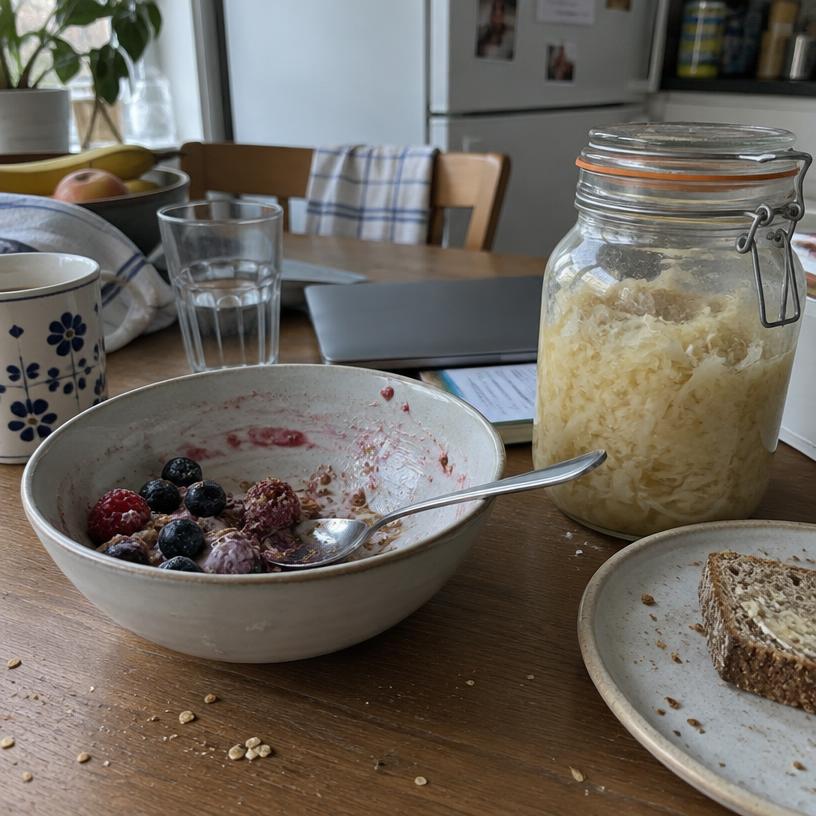
You've heard it a hundred times: health starts in the gut. But if you live with multiple sclerosis, your gut may be the least cooperative part of you — bloated by noon, regular one week and stuck the next, tired in a way that doesn't match your sleep. People in our community say it constantly: "I know I'm supposed to fix my gut. I just don't know where to start."
Tami's answer is one sphere a day. Probio Vitality™ is her number-one product. Here's why — and how to get through the first two weeks so it has a chance to help.
Why multiple sclerosis researchers can't stop talking about the gut
Roughly 70% of your immune system lives in and around the gut wall, where the bacteria next door train it all day long. In multiple sclerosis, that neighborhood is different. A Harvard team in 2016 found people with relapsing multiple sclerosis carry distinct bacterial shifts — fewer butyrate-makers among them — that tracked with inflammatory gene activity in their immune cells [2].
The thread is short-chain fatty acids. When gut bacteria ferment fiber they make butyrate, propionate and acetate, which nudge young T cells toward becoming regulatory T cells — the brakes — rather than Th17 cells, the gas pedal. In a 2020 Cell study, two weeks of oral propionate raised regulatory T cells and lowered Th17 cells in people with multiple sclerosis, even alongside a disease-modifying therapy [10]. That's what a good probiotic supports: a gut that leans toward brakes.
What the human studies found
The multiple sclerosis trials point the same direction, and the pattern is encouraging. The strongest, from Ahvaz, Iran, gave 70 people with multiple sclerosis a multi-strain Lactobacillus/Bifidobacterium capsule or placebo for six months. Fatigue in the probiotic group fell nearly four points on the Fatigue Severity Scale while placebo didn't budge, with less pain, better mood and lower IL-6 [3]; a companion report found lower CRP and TNF-α and higher FOXP3, the regulatory T-cell marker [4].
At Harvard, a small open-label study gave people with relapsing multiple sclerosis an 8-strain probiotic for two months; inflammatory markers on their immune cells came down — and crept back within three months of stopping [5].
A 2026 meta-analysis of six placebo-controlled trials (282 adults with multiple sclerosis) found probiotics improved fatigue and pain and modestly lowered CRP; disability scores held steady [6], and what did move is what you feel every day.
Our eight strains come mainly from the same two families the multiple sclerosis trials used — Lactobacillus and Bifidobacterium — in a multi-strain blend like theirs. Probiotic research is strain-specific [1], and one of ours, B. lactis UABla-12, carries its own randomized trial, where it eased abdominal pain in IBS [8] — a track record most probiotics on the shelf can't claim. Each multiple sclerosis trial used its own mix, so no product matches them strain for strain; ours is built the way they were built, from the families that worked.
Why we're comfortable with this formula
Probio Vitality™ is eight Lactobacillus, Bifidobacterium and S. thermophilus strains, 5 billion CFU, in a delayed-release, shelf-stable sphere.
Multi-strain matters: in the mouse model of multiple sclerosis, three lactobacilli given singly could prevent disease but not treat it; only the mix reversed it, and heat-killed bacteria did nothing [7]. The sphere matters too: stomach acid kills much of an unprotected dose; the delayed-release coating gets more of the label count to your colon.
And the dose is built to flex. One sphere — 5 billion CFU — is the everyday dose most people can keep up without a rough first week, and it's where we'd have you start. The trials used higher counts, so once your gut has settled, a second sphere a day gets you closer to trial range; some in our community take two for a stretch when the gut is noisy and drop back to one when it's quiet. The biggest reason people quit a probiotic is bloating in week one — start at one, build as needed, and stay with it.
How to get the most out of it
Swallow it whole, daily, for 8–12 weeks. Don't chew. The Harvard immune changes reversed within three months of stopping [5]; the Ahvaz fatigue results took six months [3]. Ten days tells you nothing.
Feed it. Our strains mostly make lactate and acetate, which other bacteria turn into butyrate — so Butyrate Gut Vitality™ supplies the short-chain fatty acid the multiple sclerosis data point to most directly [10]. Keep the sphere a couple of hours from Berberine Gut Vitality™.
At a glance: how much to take
The label is your starting point, not your ceiling. The trials behind this product often used more, and the rows below show where the research went. Anything above the label is a conversation to have with your own physician — bring the numbers with you.
| Situation | How much | Notes |
|---|---|---|
| Start here (label) | 1 sphere daily with breakfast | Expect 1–2 adjustment weeks; give it 12 weeks |
| Noisy-gut stretch, or you want closer to trial range | 2 spheres a day (10 billion CFU), once the first weeks have settled | Add the second sphere with another meal; drop back to 1 when things are quiet. Ask your own doctor before going above the label |
| Reactive gut | 1 sphere every other day for 1–2 weeks, then daily | Still rough past 3 weeks? Stop and ask your doctor |
| On antibiotics | 1 sphere daily, 2 hours from each antibiotic dose | Continue 2–4 weeks after the course ends |
| Ask first | — | Very low lymphocytes, central line or port, histamine/mast-cell issues; clear it in pregnancy |
| Multiple sclerosis relapse or new symptoms | Don't change any dose on your own | Call your neurologist first |
If this is you
Bloated, irregular, or both. Take one sphere daily with a meal. Expect one to two rough weeks — gas, bloating, a change in stools — as the ecosystem shifts. If it's more than mild, go every other day for a week, then back to daily. Once you've settled in, you can add a second sphere with another meal for a few weeks when the gut gets noisy, then return to one. Still rough past three weeks at the starting dose? Stop and talk with your doctor — that can point to small-intestinal bacterial overgrowth, which needs a different approach.
On antibiotics. Keep taking it, two hours apart from each antibiotic dose. Continue daily for 2–4 weeks after the course ends.
Histamine or mast-cell issues. Ask your doctor before starting. If you flush, itch or get headaches in the first days, stop.
Whichever route you've chosen for the disease itself. Some in our community take a disease-modifying therapy; some, with their doctors, have chosen not to. The dose is the same either way. On a DMT, the only group that needs a conversation first is very low lymphocyte counts (see above); the Harvard study ran alongside standard treatment without a signal. Off a DMT, there's nothing to interact with — give it the full 12 weeks, because the gut is doing more of the immune-balance work on its own.
On safety: these are live bacteria, which matters if your immune defenses are very low — a central line or port, a stem-cell transplant, or alemtuzumab, cladribine or high-dose steroids with very low lymphocyte counts — so talk with your neurologist first [9]. On standard DMTs with normal counts we know of no safety signal [5], but ask your own doctor. Pregnant or nursing, check with your obstetrician.
Where Tami landed
"I was told I'd need a cane. Today I play competitive tennis, and the first thing that got better was my gut — less bloating, more regular, less of that afternoon crash. It took about two weeks of my stomach complaining before it settled — if I'd quit on day five like a lot of people do, I'd never have known. It's the one thing I never skip."
That's where I land too. If your gut has been standing between you and everything else, this is a sensible place to start.
Probio Vitality™ is part of the Gut Vitality Package™ at agingbackwardswellness.com. Start here, stay consistent, and let your gut catch up with the rest of you.
References
- Hill C, Guarner F, Reid G, et al. The International Scientific Association for Probiotics and Prebiotics consensus statement on the scope and appropriate use of the term probiotic. Nat Rev Gastroenterol Hepatol. 2014;11(8):506–514. https://doi.org/10.1038/nrgastro.2014.66
- Jangi S, Gandhi R, Cox LM, et al. Alterations of the human gut microbiome in multiple sclerosis. Nat Commun. 2016;7:12015. https://doi.org/10.1038/ncomms12015
- Rahimlou M, Hosseini SA, Majdinasab N, Haghighizadeh MH, Husain D. Effects of long-term administration of multi-strain probiotic on circulating levels of BDNF, NGF, IL-6 and mental health in patients with multiple sclerosis: a randomized, double-blind, placebo-controlled trial. Nutr Neurosci. 2022;25(2):411–422. PMID 32500827. https://doi.org/10.1080/1028415X.2020.1758887
- Rahimlou M, Nematollahi S, Husain D, Banaei-Jahromi N, Majdinasab N, Hosseini SA. Probiotic supplementation and systemic inflammation in relapsing-remitting multiple sclerosis: a randomized, double-blind, placebo-controlled trial. Front Neurosci. 2022;16:901846. https://doi.org/10.3389/fnins.2022.901846
- Tankou SK, Regev K, Healy BC, et al. A probiotic modulates the microbiome and immunity in multiple sclerosis. Ann Neurol. 2018;83(6):1147–1161. PMID 29679417. https://doi.org/10.1002/ana.25244
- Blanca-Serrano T, Agredano-Sánchez M, López Gigosos RM, Jiménez Navarro MF, González-Domenech CM, Gutiérrez-Bedmar M. Physical, mental and biochemical effects of probiotics in multiple sclerosis: a systematic review and meta-analysis. Clin Nutr. 2026;64:106747. PMID 42580083. https://doi.org/10.1016/j.clnu.2026.106747
- Lavasani S, Dzhambazov B, Nouri M, et al. A novel probiotic mixture exerts a therapeutic effect on experimental autoimmune encephalomyelitis mediated by IL-10 producing regulatory T cells. PLoS One. 2010;5(2):e9009. https://doi.org/10.1371/journal.pone.0009009
- Martoni CJ, Srivastava S, Leyer GJ. Lactobacillus acidophilus DDS-1 and Bifidobacterium lactis UABla-12 improve abdominal pain severity and symptomology in irritable bowel syndrome: randomized controlled trial. Nutrients. 2020;12(2):363. PMID 32019158. https://doi.org/10.3390/nu12020363
- Yelin I, Flett KB, Merakou C, et al. Genomic and epidemiological evidence of bacterial transmission from probiotic capsule to blood in ICU patients. Nat Med. 2019;25(11):1728–1732. https://doi.org/10.1038/s41591-019-0626-9
- Duscha A, Gisevius B, Hirschberg S, et al. Propionic acid shapes the multiple sclerosis disease course by an immunomodulatory mechanism. Cell. 2020;180(6):1067–1080.e16. PMID 32160527. https://doi.org/10.1016/j.cell.2020.02.035
These statements have not been evaluated by the Food and Drug Administration. This product is not intended to diagnose, treat, cure, or prevent any disease. This article is educational and reflects published research; it is not medical advice and does not create a doctor–patient relationship. Multiple sclerosis is a serious condition — please discuss any supplement with your neurologist or physician, especially if you take a disease-modifying therapy or other prescription medications.
Aging Backwards Wellness · Manti, Utah · agingbackwardswellness.com