


By Dr. Ben Wright, DO — Aging Backwards Wellness, Manti, Utah
Someone in our community said it best: "Some days it feels like my body is rusting from the inside." The fatigue that doesn't match what you did. The three-day recovery from a one-hour outing.
Tami knew it. After her multiple sclerosis diagnosis she was told to plan on a cane. Today she plays competitive tennis and keeps up with the kids — but she'll tell you the hard part was never the match. It was the next morning.
"Rusting" is a good word for what the research describes — and how much vitamin C to take, on an ordinary day and on a sick day, is the most useful thing I can tell you here.
Why "rusting" is closer to the truth than you'd think
Rust is oxidation. Your cells face it daily: metabolism and immune activity throw off unstable molecules that damage fats, proteins, and DNA, and antioxidants clean them up. When damage outruns cleanup, that's oxidative stress.
In multiple sclerosis, the balance leans the wrong way. A 2024 review found the most consistent oxidative marker in multiple sclerosis is elevated lipid peroxidation — oxidized fats — in blood and spinal fluid, with antioxidant capacity often reduced and vitamin C itself lower in several studies [2]. The authors describe it as a possible contributor rather than the root cause — and it's exactly the piece an antioxidant like vitamin C is built to address.
Vitamin C is the body's main water-soluble antioxidant. It neutralizes those molecules, regenerates vitamin E so it can keep protecting cell membranes [4], and is a required helper for the enzymes that build collagen, carnitine and several neurotransmitters [12].
What the research says
The multiple sclerosis-specific signal is early and pointing the right way: a 2026 UK Biobank analysis found that people taking vitamin C supplements had about half the rate of new multiple sclerosis diagnoses, a finding built on a small number of cases that we'll watch as it grows [1]. Vitamin C hasn't been through a full trial in people with multiple sclerosis yet, and we'll say so when it has. The practical guidance comes from decades of trials in the general population, and it has two halves.
Every day. A Cochrane review of 11,306 people found daily vitamin C shortened colds in adults and children, and in people under heavy physical stress — marathoners, skiers, soldiers — it cut cold incidence roughly in half [3]. It does its clearest work in bodies under strain, and if a grocery run feels like a training run, that's you.
When you're sick. Here's the part most vitamin C advice misses. Your immune cells burn vitamin C when they fight. In a 1973 study, white-cell vitamin C fell to scurvy-range levels within 24 hours of a cold starting and didn't recover until the cold ended; the researchers found 1 gram a day was enough to prevent that drop but it took 6 grams a day to hold levels up once a cold had begun [13]. A 2017 review of the whole literature confirms it: plasma and white-cell vitamin C fall during infections, and in the two trials that tested different doses head-to-head, colds got shorter in a straight line up to 6–8 grams a day [14–16]. The therapeutic trials that "failed" gave 2–4 grams for only two or three days of a week-long cold [14]. Too little, too briefly.
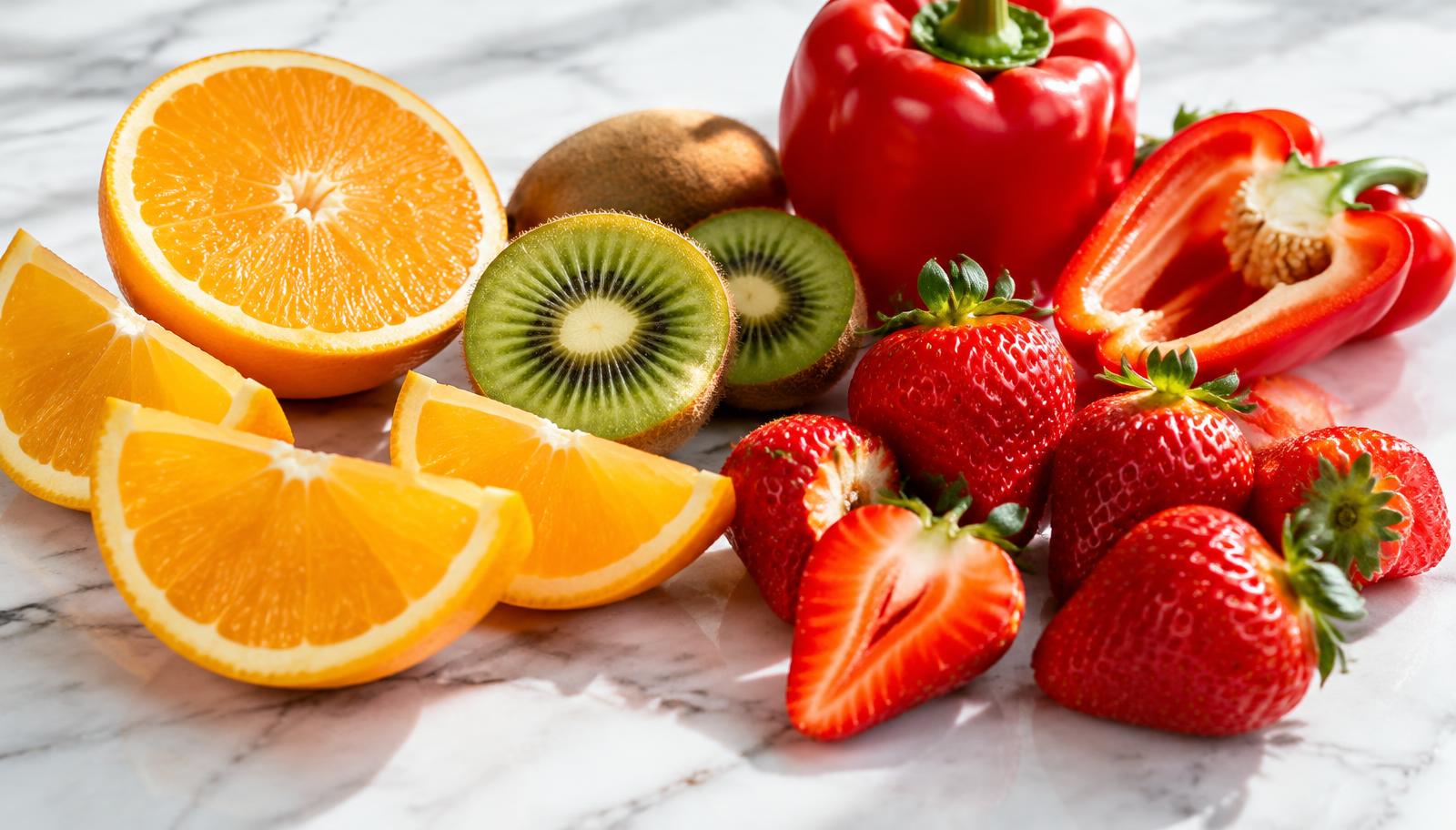
The hesperidin and quercetin round out the formula — antioxidants in their own right that mirror how vitamin C arrives in food (acerola is among the richest sources [9]) [7, 8].
Why 600 mg every day — and more when you're sick
On an ordinary day, NIH dosing studies in healthy volunteers show tissues saturate by a few hundred milligrams, and anything above that leaves in the urine [5, 6]. That's why we're comfortable with 600 mg once daily: it keeps tissues full on an imperfect diet, with room to spare, and stays well under the 2,000 mg daily upper limit [12] — the amount that, taken year-round, was tied to more kidney stones in Swedish men [10].
But those saturation numbers were measured in healthy people. When you're sick, your white cells use vitamin C faster than you can absorb it at low doses [13, 14]. So the strategy is the one the research supports: a steady 600 mg every day, and a short, divided-dose surge for the first days of a cold — then back to one capsule.
At a glance: how much to take
The label is your starting point, not your ceiling. The trials behind this product often used more, and the rows below show where the research went. Anything above the label is a conversation to have with your own physician — bring the numbers with you.
| Situation | How much | Notes |
|---|---|---|
| Start here (label) | 1 capsule daily with food | Keeps tissues full; daily use is what shortened colds in the trials |
| First 3–5 days of a cold | 2 capsules every 3–4 hours while awake (about 3.6–6 g a day), then back to 1 | Divided doses matter — your body can only absorb so much at once. Ask your own doctor before going above the label |
| Ask first | — | Kidney stones or kidney disease, hemochromatosis, G6PD deficiency, chemo/radiation; clear it in pregnancy. Loose stools mean you've hit your limit — back off |
| Multiple sclerosis relapse or new symptoms | Don't change any dose on your own | Call your neurologist first |
If this is you
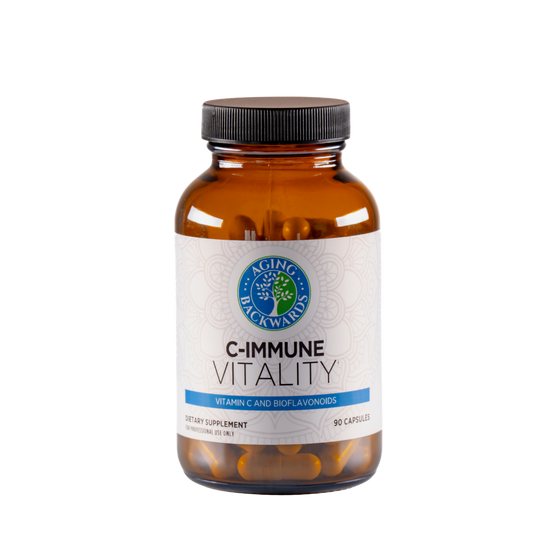
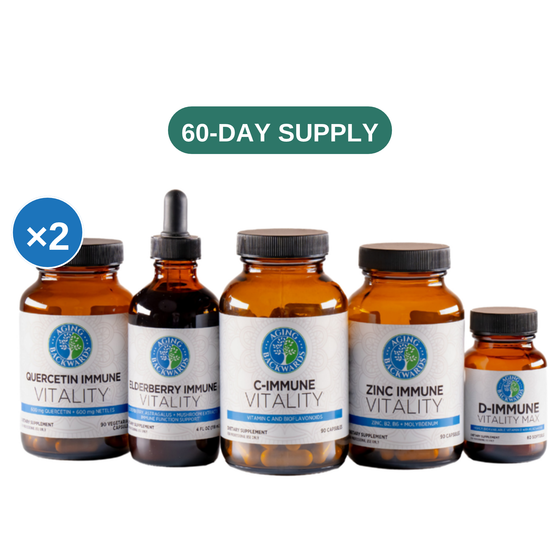
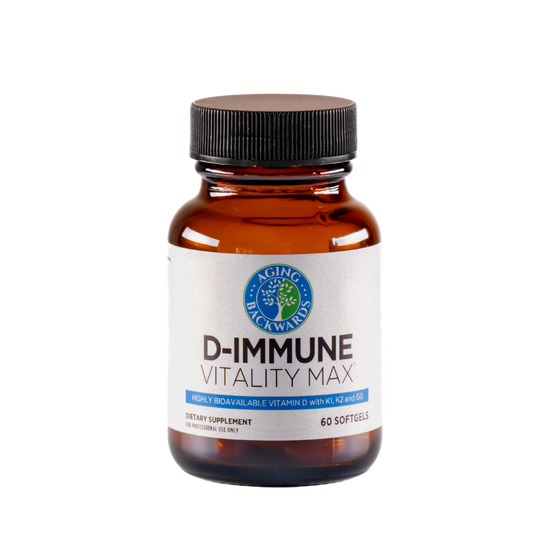
You just want the basics covered. Take one capsule every day with food. The everyday habit is what the prevention trials rewarded [3]. In the Immune Vitality Max Package™ it's the baseline antioxidant beside vitamin D, zinc, and full-dose quercetin.
You feel a cold coming on. Start the surge the same day: 2 capsules every 3–4 hours while you're awake for the first three to five days — the range where the dose-response trials saw the shortest colds [14–16] — then drop back to one. Spread it out; a single big dose is mostly wasted [6]. Loose stools are the signal you've reached your limit. Run the plan past your own doctor first.
You've had kidney stones or kidney disease, or have hemochromatosis. Ask your own doctor before starting, and skip the sick-day surge unless they specifically agree. Urinary oxalate climbs at gram doses [6, 10], and vitamin C increases iron absorption [12].
Whichever route you've chosen for the disease itself. Some in our community take a disease-modifying therapy; some, with their doctors, have chosen not to. The dose is the same either way. On a DMT, there's no documented interaction. Off a DMT, keeping infections short is doing more of the work, so the everyday capsule and the sick-day surge both earn their place; the kidney-stone cautions apply to everyone.
On safety: oral vitamin C has no documented interaction with the multiple sclerosis disease-modifying therapies, which is reassuring — and the simplest way to keep it that way is to tell your neurologist everything you take. Ask first if you have G6PD deficiency or are in chemotherapy or radiation [11, 12]. Pregnant or nursing? One capsule a day is below the upper limit; clear anything more with your obstetric provider.
Where Tami landed
"One capsule with breakfast is the easiest thing in my cabinet, and the one I never skip. And the day I feel a cold starting, I keep the bottle on the counter and take it around the clock for a few days. My colds got shorter when I started doing that."
That's where I land too. Vitamin C is foundational — one capsule a day keeps the tank full, and when a cold hits, the research says to refill it fast and often for a few days. That's the whole plan, and it's the one the trials actually support.
C-Immune Vitality™ is part of the Immune Vitality Max Package™ at agingbackwardswellness.com. If you've been taking vitamin C by guesswork, this is how the research says to do it.
References
- Nova A, Fazia T, Di Caprio G, Cinquepalmi A, Perna S, Rondanelli M, Bernardinelli L. Association of vitamin C supplementation and genetic susceptibility with multiple sclerosis risk: a prospective population-based cohort study. Nutrients. 2026;18(14):2367. https://doi.org/10.3390/nu18142367
- Jiménez-Jiménez FJ, Alonso-Navarro H, Salgado-Cámara P, García-Martín E, Agúndez JAG. Oxidative stress markers in multiple sclerosis. Int J Mol Sci. 2024;25(12):6289. https://doi.org/10.3390/ijms25126289
- Hemilä H, Chalker E. Vitamin C for preventing and treating the common cold. Cochrane Database Syst Rev. 2013;(1):CD000980. https://doi.org/10.1002/14651858.CD000980.pub4
- Carr AC, Maggini S. Vitamin C and immune function. Nutrients. 2017;9(11):1211. https://doi.org/10.3390/nu9111211
- Levine M, Conry-Cantilena C, Wang Y, et al. Vitamin C pharmacokinetics in healthy volunteers: evidence for a recommended dietary allowance. Proc Natl Acad Sci U S A. 1996;93(8):3704–3709. PMID 8623000. https://doi.org/10.1073/pnas.93.8.3704
- Padayatty SJ, Sun H, Wang Y, et al. Vitamin C pharmacokinetics: implications for oral and intravenous use. Ann Intern Med. 2004;140(7):533–537. PMID 15068981. https://doi.org/10.7326/0003-4819-140-7-200404060-00010
- Rizza S, Muniyappa R, Iantorno M, et al. Citrus polyphenol hesperidin stimulates production of nitric oxide in endothelial cells while improving endothelial function and reducing inflammatory markers in patients with metabolic syndrome. J Clin Endocrinol Metab. 2011;96(5):E782–E792. PMID 21346065. https://doi.org/10.1210/jc.2010-2879
- Heinz SA, Henson DA, Austin MD, Jin F, Nieman DC. Quercetin supplementation and upper respiratory tract infection: a randomized community clinical trial. Pharmacol Res. 2010;62(3):237–242. https://doi.org/10.1016/j.phrs.2010.05.001
- Olędzki R, Harasym J. Acerola (Malpighia emarginata) anti-inflammatory activity: a review. Int J Mol Sci. 2024;25(4):2089. https://doi.org/10.3390/ijms25042089
- Thomas LDK, Elinder CG, Tiselius HG, Wolk A, Åkesson A. Ascorbic acid supplements and kidney stone incidence among men: a prospective study. JAMA Intern Med. 2013;173(5):386–388. PMID 23381591. https://doi.org/10.1001/jamainternmed.2013.2296
- Quinn J, Gerber B, Fouche R, Kenyon K, Blom Z, Muthukanagaraj P. Effect of high-dose vitamin C infusion in a glucose-6-phosphate dehydrogenase-deficient patient. Case Rep Med. 2017;2017:5202606. https://doi.org/10.1155/2017/5202606
- National Institutes of Health, Office of Dietary Supplements. Vitamin C: Fact Sheet for Health Professionals. https://ods.od.nih.gov/factsheets/VitaminC-HealthProfessional/
- Hume R, Weyers E. Changes in leucocyte ascorbic acid during the common cold. Scott Med J. 1973;18(1):3–7. https://doi.org/10.1177/003693307301800102
- Hemilä H. Vitamin C and infections. Nutrients. 2017;9(4):339. https://doi.org/10.3390/nu9040339
- Karlowski TR, Chalmers TC, Frenkel LD, Kapikian AZ, Lewis TL, Lynch JM. Ascorbic acid for the common cold: a prophylactic and therapeutic trial. JAMA. 1975;231(10):1038–1042.
- Anderson TW, Suranyi G, Beaton GH. The effect on winter illness of large doses of vitamin C. Can Med Assoc J. 1974;111(1):31–36.
These statements have not been evaluated by the Food and Drug Administration. This product is not intended to diagnose, treat, cure, or prevent any disease. This article is educational and reflects published research; it is not medical advice and does not create a doctor–patient relationship. Multiple sclerosis is a serious condition — please discuss any supplement with your neurologist or physician, especially if you take a disease-modifying therapy or other prescription medications.
Aging Backwards Wellness · Manti, Utah · agingbackwardswellness.com