





By Dr. Ben Wright, DO — Aging Backwards Wellness, Manti, Utah
We hear it almost every week: "My neurologist told me to take vitamin D. That was the whole conversation. No dose, no target, no reason." So people buy whatever is on the shelf, and the next lab is still low.
Tami's level was low at diagnosis, the same year she was told to plan on a cane. With a real dose, a target, and a lab slip, vitamin D became one of the cornerstones of a routine that has her on a tennis court instead of a couch. It is the most studied nutrient in multiple sclerosis, and it deserves a better conversation than "take some."
Why it matters so much in multiple sclerosis
Vitamin D is really a hormone: your skin makes it from sunlight, your liver converts it to 25-hydroxyvitamin D (the number on your lab report), and your kidneys and immune cells switch it on.
Multiple sclerosis isn't a weak immune system; part of it is running too hot, and the brakes don't quite hold. Give immune cells from people with multiple sclerosis active vitamin D and they make more IL-10 (a calming signal), more regulatory T cells (the brakes), and fewer inflammatory signals [8]. In a six-month randomized pilot in 40 people with relapsing multiple sclerosis, 10,400 IU a day shrank the share of Th17 cells (the gas pedal) while 800 IU did not [4]. Dose mattered.
What the research shows
In a US military serum bank of seven million samples, people whose vitamin D sat in the top fifth (about 40 ng/mL and up) had 62% lower odds of developing multiple sclerosis than the bottom fifth [1]. In 465 people followed after a first attack, every 50 nmol/L higher vitamin D in year one meant 57% fewer new lesions, 57% fewer relapses, and less brain volume loss over five years [2]. In 1,482 people on interferon, the fewest new lesions belonged to those above 100 nmol/L (40 ng/mL) — and the curve was still falling at the top of the range, not flattening [16].
D-Lay multiple sclerosis (JAMA, 2025), the trial everyone had waited for, randomized 316 untreated people with a first multiple sclerosis-type attack to high-dose vitamin D (about 7,100 IU a day) or placebo for two years. Disease activity occurred in 60% on vitamin D versus 74% on placebo, with no safety difference [3]. The vitamin D group's blood level rose by about 94 nmol/L — landing most of them in the 55–60 ng/mL range — and the more a person's level rose, the lower their risk [17].
In established multiple sclerosis already on a disease-modifying therapy, added vitamin D nudged MRI lesion counts down (SOLAR: 32% fewer active lesions on 14,000 IU a day [5]), with relapse rates holding steady on top of what the medication was already doing; results varied from trial to trial, and one first-attack trial (PrevANZ) saw no added benefit [6]. The through-line is simple: the clearest wins belong to people who moved out of the low range. The main reason to take it is to make sure you are never the person in the bottom fifth — whatever route you've chosen for the disease itself. And those trials ran 5,000 to 14,000 IU a day for one to two years with no high blood calcium on routine labs [5–7].
Why vitamin K is in the same softgel
High-dose vitamin D increases how much calcium you absorb. Vitamin K decides where it goes, activating osteocalcin (calcium into bone) and matrix Gla protein (calcium out of artery walls) [10].
For people with multiple sclerosis, bone is not abstract: steroids, less walking, less sun, and falls add up. In a UK cohort, people with multiple sclerosis had about four times the hip-fracture risk of matched controls [11].
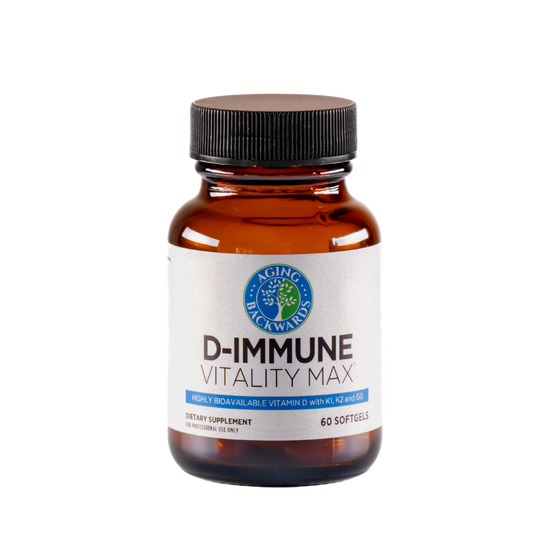
That is why we're comfortable with this formula: 10,000 IU of D3 with 1,000 mcg each of K1 and K2 (as MK-4, the form your brain and tissues use) plus geranylgeraniol, which your tissues use to convert K1 into MK-4 [12]. The D and K have decades of human data behind them; the geranylgeraniol rests on sound biochemistry, and it's there to help the K do its job.
At a glance: how much to take
The label is your starting point; your lab number sets the course. The multiple sclerosis trials ran 5,000 to 14,000 IU a day. If one softgel isn't lifting your level into range by the three-month recheck, going higher is a conversation to have with your own physician — bring the numbers with you.
| Situation | How much | Notes |
|---|---|---|
| Level under 50 ng/mL | 1 softgel daily with your largest meal + magnesium | Recheck 25-OH-D and calcium at 3 months |
| At target (50–80 ng/mL) | 1 softgel daily or every other day — whatever holds you there | Recheck every 6–12 months |
| Level above 100 ng/mL | Pause and call your doctor | Have calcium checked; resume at a lower dose once you're back in range |
| During a cold or flare | Don't spike the dose — steady beats surges | High-dose D is a long game, not a rescue |
| Do not start without your physician | — | Kidney stones or kidney disease, sarcoidosis, high calcium, hyperparathyroidism, warfarin |
| Multiple sclerosis relapse or new symptoms | Don't change any dose on your own | Call your neurologist first |
If this is you
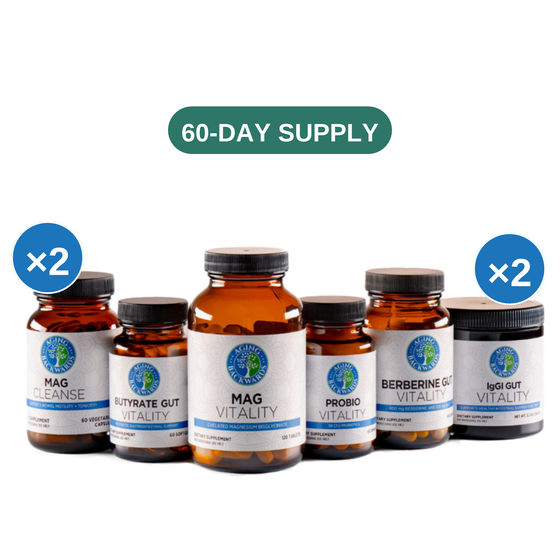
The rules for everyone: D and K are fat-soluble, so take the softgel with your largest meal. Pair it with magnesium, which the enzymes that activate vitamin D need [9] (it lives in our Gut Vitality Package™). Aim for 50–80 ng/mL (125–200 nmol/L). That is higher than the 30 most labs call "sufficient," and on purpose: the multiple sclerosis cohorts with the fewest lesions sat above 40 [1,2,16], the D-Lay multiple sclerosis group that did well landed in the 50s and 60s [17], and the big mortality curves keep improving up to about 40–50 ng/mL and show no uptick through 50 ng/mL (125 nmol/L) [18,19]. Some functional-medicine clinicians aim as high as 100. We stop at 80 because that's as far as the outcome data go, and because true toxicity — high calcium — doesn't appear until levels pass 150 ng/mL [20]; stopping at 80 gives you the full benefit with a wide margin. In 20,000 Mayo Clinic measurements, levels above 50 carried no extra risk of high calcium, and the one true toxicity case was at 364 ng/mL on 50,000 IU a day [20]. And get labs: 10,000 IU a day sits at the Endocrine Society's upper limit and above the Institute of Medicine's 4,000 IU [13,14]; every trial that used it safely did so with monitoring.
Your level is under 50 ng/mL. Take one softgel daily with fat and magnesium. Recheck 25-OH-D and calcium at three months; levels take 8–12 weeks to plateau. Once you reach 50–80, ask your doctor whether daily or every-other-day holds you there.
Your level is already 50–80 ng/mL. You are where the research says to be. Ask your doctor whether every-other-day dosing or a lower maintenance dose holds you there. Recheck every six to twelve months, and if a result comes back over 100, pause and recheck calcium.
You have had kidney stones or kidney disease, sarcoidosis, high calcium or hyperparathyroidism, or you take warfarin. Do not start this on your own. These are the people for whom the calcium risk at this dose is real, and 2,000 mcg of vitamin K can counteract warfarin. If your physician specifically agrees, get baseline labs first, and for warfarin an INR plan.
Whichever route you've chosen for the disease itself. Some in our community take a disease-modifying therapy; some, with their doctors, have chosen not to. The dose, the target of 50–80 ng/mL, and the labs are identical either way. On a DMT, the trials that added vitamin D to interferon and glatiramer showed no safety signal. Off a DMT, vitamin D is carrying more of the immune-balance load on its own — which makes hitting and holding the target, with the 3-month recheck, the single most important thing in this package.
Labs are what make this dose a safe one. The thing they watch for is high blood calcium — uncommon in long-term trials, where kidney stones did not significantly increase [15] — and a simple recheck keeps you comfortably clear of it. Thiazide diuretics and calcium supplements raise that risk; tell your doctor. Trials adding it to interferon and glatiramer showed no safety signal [5–7]. Skip it in pregnancy or nursing unless your obstetrician agrees. Call your doctor for persistent nausea, unusual thirst, frequent urination, confusion, or flank pain.
Where Tami landed
"For years 'take vitamin D' meant a gummy and a shrug. The difference was somebody finally telling me the number to aim for and checking whether I got there. I'm there now, my bones are in good shape, and I'm not lying awake wondering whether I'm doing the one thing everyone agrees on."
That's where I land too. This is the one nutrient the multiple sclerosis world agrees you should not be low in. Make sure you aren't, with your doctor watching the labs.
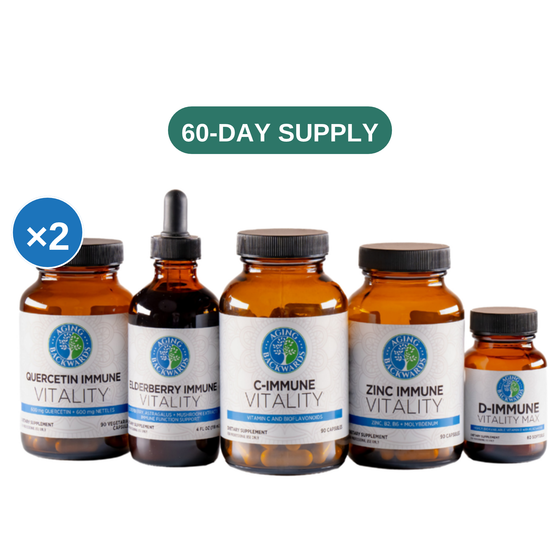
D-Immune Vitality Max™ is part of the Immune Vitality Max Package™ at agingbackwardswellness.com. If "take vitamin D" has been the whole conversation, this is how to finish it.
References
- Munger KL, Levin LI, Hollis BW, Howard NS, Ascherio A. Serum 25-hydroxyvitamin D levels and risk of multiple sclerosis. JAMA. 2006;296(23):2832-2838. PMID 17179460. https://pubmed.ncbi.nlm.nih.gov/17179460/
- Ascherio A, Munger KL, White R, et al. Vitamin D as an early predictor of multiple sclerosis activity and progression. JAMA Neurol. 2014;71(3):306-314. PMID 24445558. https://pubmed.ncbi.nlm.nih.gov/24445558/
- Thouvenot E, et al. High-dose vitamin D in clinically isolated syndrome typical of multiple sclerosis: the D-Lay MS randomized clinical trial. JAMA. 2025. DOI 10.1001/jama.2025.1604. https://doi.org/10.1001/jama.2025.1604
- Sotirchos ES, Bhargava P, Eckstein C, et al. Safety and immunologic effects of high- vs low-dose cholecalciferol in multiple sclerosis. Neurology. 2016;86(4):382-390. PMID 26718578. https://pubmed.ncbi.nlm.nih.gov/26718578/
- Hupperts R, Smolders J, Vieth R, et al. Randomized trial of daily high-dose vitamin D3 in patients with RRMS receiving subcutaneous interferon β-1a (SOLAR). Neurology. 2019;93(20):e1906-e1916. PMID 31594857. https://pubmed.ncbi.nlm.nih.gov/31594857/
- Butzkueven H, Ponsonby AL, Stein MS, et al. Vitamin D did not reduce multiple sclerosis disease activity after a clinically isolated syndrome (PrevANZ). Brain. 2024;147(4):1206-1215. DOI 10.1093/brain/awad409. https://doi.org/10.1093/brain/awad409
- Cassard SD, Fitzgerald KC, Qian P, et al. High-dose vitamin D3 supplementation in relapsing-remitting multiple sclerosis: a randomised clinical trial (VIDAMS). eClinicalMedicine. 2023;59:101957. PMID 37125397. https://pubmed.ncbi.nlm.nih.gov/37125397/
- Correale J, Ysrraelit MC, Gaitán MI. Immunomodulatory effects of vitamin D in multiple sclerosis. Brain. 2009;132(5):1146-1160. PMID 19321461. https://pubmed.ncbi.nlm.nih.gov/19321461/
- Uwitonze AM, Razzaque MS. Role of magnesium in vitamin D activation and function. J Am Osteopath Assoc. 2018;118(3):181-189. PMID 29480918. https://pubmed.ncbi.nlm.nih.gov/29480918/
- van Ballegooijen AJ, Pilz S, Tomaschitz A, Grübler MR, Verheyen N. The synergistic interplay between vitamins D and K for bone and cardiovascular health: a narrative review. Int J Endocrinol. 2017;2017:7454376. PMID 29138634. https://pubmed.ncbi.nlm.nih.gov/29138634/
- Bazelier MT, van Staa TP, Uitdehaag BM, et al. Risk of fractures in patients with multiple sclerosis: a population-based cohort study. Neurology. 2012;78(24):1967-1973. PMID 23109656. https://pubmed.ncbi.nlm.nih.gov/23109656/
- Nakagawa K, Hirota Y, Sawada N, et al. Identification of UBIAD1 as a novel human menaquinone-4 biosynthetic enzyme. Nature. 2010;468(7320):117-121. PMID 20953171. https://pubmed.ncbi.nlm.nih.gov/20953171/
- Holick MF, Binkley NC, Bischoff-Ferrari HA, et al. Evaluation, treatment, and prevention of vitamin D deficiency: an Endocrine Society clinical practice guideline. J Clin Endocrinol Metab. 2011;96(7):1911-1930. PMID 21646368. https://pubmed.ncbi.nlm.nih.gov/21646368/
- Institute of Medicine. Dietary Reference Intakes for Calcium and Vitamin D. Washington, DC: National Academies Press; 2011. PMID 21796828. https://pubmed.ncbi.nlm.nih.gov/21796828/
- Malihi Z, Wu Z, Stewart AW, Lawes CM, Scragg R. Hypercalcemia, hypercalciuria, and kidney stones in long-term studies of vitamin D supplementation: a systematic review and meta-analysis. Am J Clin Nutr. 2016;104(4):1039-1051. PMID 27604776. https://pubmed.ncbi.nlm.nih.gov/27604776/
- Fitzgerald KC, Munger KL, Köchert K, et al. Association of vitamin D levels with multiple sclerosis activity and progression in patients receiving interferon beta-1b. JAMA Neurol. 2015;72(12):1458-1465. https://doi.org/10.1001/jamaneurol.2015.2742
- Rival M, Demattei C, Boulet L, Mura T, Agherbi H, Thouvenot E. Effects of vitamin D supplementation on disease activity after a clinically isolated syndrome according to plasma vitamin D levels: ancillary analysis of the D-Lay MS randomized controlled trial. Neurology. 2026;106(Suppl, AAN 2026 abstract). https://doi.org/10.1212/WNL.0000000000216162
- Garland CF, Kim JJ, Mohr SB, et al. Meta-analysis of all-cause mortality according to serum 25-hydroxyvitamin D. Am J Public Health. 2014;104(8):e43-e50. https://doi.org/10.2105/AJPH.2014.302034
- Gaksch M, Jorde R, Grimnes G, et al. Vitamin D and mortality: individual participant data meta-analysis of standardized 25-hydroxyvitamin D in 26,916 individuals from a European consortium. PLoS One. 2017;12(2):e0170791. https://doi.org/10.1371/journal.pone.0170791
- Dudenkov DV, Yawn BP, Oberhelman SS, et al. Changing incidence of serum 25-hydroxyvitamin D values above 50 ng/mL: a 10-year population-based study. Mayo Clin Proc. 2015;90(5):577-586. https://doi.org/10.1016/j.mayocp.2015.02.012
These statements have not been evaluated by the Food and Drug Administration. This product is not intended to diagnose, treat, cure, or prevent any disease. This article is educational and reflects published research; it is not medical advice and does not create a doctor–patient relationship. Multiple sclerosis is a serious condition — please discuss any supplement with your neurologist or physician, especially if you take a disease-modifying therapy or other prescription medications.
Aging Backwards Wellness · Manti, Utah · agingbackwardswellness.com