



By Dr. Ben Wright, DO — Aging Backwards Wellness, Manti, Utah
If you've lived with multiple sclerosis for more than a season, you know the pattern. You catch whatever the kids brought home, and it's never just a cold. Your legs get heavier, the fog rolls in, and you spend three weeks wondering whether this is a relapse or your body being dramatic about a virus.
Tami's version was spring. Every April the pollen would hit, and within a couple of weeks her whole system would go sideways. She used to say she was allergic to May.
The question we hear most: "Is there anything I can take so every little thing doesn't knock me flat?" Nobody's asking for a miracle — just to turn the volume down. Quercetin is one of the first things I point people to.
Why a cold hits you harder than it hits your neighbor
Multiple sclerosis isn't a weak immune system. Part of it is running too hot — a set of cells (Th17 cells) keeps the gas pedal down on inflammation, and the brakes can't quite hold.
Now add a virus or a face full of pollen. Your body flips a master inflammation switch (NF-κB) and wakes up alarm cells called mast cells. Mast cells cause the sneezing — but they also sit at the gate of the blood–brain barrier. The same alarm that makes your nose run is ringing in the one place you most need quiet. That's "every cold sets me back," in one sentence.
Quercetin — the yellow pigment in onion skins and apples — acts directly on that switch and those cells. In human mast cells it blocked histamine and inflammatory signals better than cromolyn, an actual prescription mast-cell stabilizer [5]. Nettle leaf hits the same switch through a different door [6], which is why the two have shared a capsule for decades.
What the research says
The multiple sclerosis-specific piece is genuinely encouraging. In 2008, researchers took immune cells from people with relapsing multiple sclerosis and exposed them to quercetin. The cells multiplied less, released less TNF-α and IL-1β — two of the loudest inflammatory signals in multiple sclerosis — and made less of the enzyme they use to break through the blood–brain barrier [1]. When interferon-beta was added alongside, the effects added together. Quercetin worked with the drug, not against it.
That's the multiple sclerosis biology, measured directly in multiple sclerosis immune cells. Quercetin hasn't been put through a full trial in people with multiple sclerosis yet, and we'll say so when it is. In the meantime, the human trials in other conditions tell you who it helps.
A thousand adults took 500 or 1,000 mg for 12 weeks. Fit adults over 40 on the higher dose had 31% fewer sick days and milder colds [2]. Fifty women with rheumatoid arthritis took 500 mg for 8 weeks and had less stiffness, less pain, and lower disease activity than placebo [3]. And healthy young women with nothing to calm simply stayed where they were [4] — quercetin quiets what's loud without pushing a quiet system around.
The pattern couldn't be clearer: quercetin does its best work in people who have inflammation to calm. If you have multiple sclerosis, allergies, and an immune system that overreacts to every virus — you're the person the positive studies describe.
Nettle leaf earns its place too: a 1990 trial at 600 mg (our dose) beat placebo for hay fever [7]. Together, the pair covers the switchboard from two sides.
At a glance: how much to take
The label is your starting point, not your ceiling. The trials behind this product often used more, and the rows below show where the research went. Anything above the label is a conversation to have with your own physician — bring the numbers with you.
| Situation | How much | Notes |
|---|---|---|
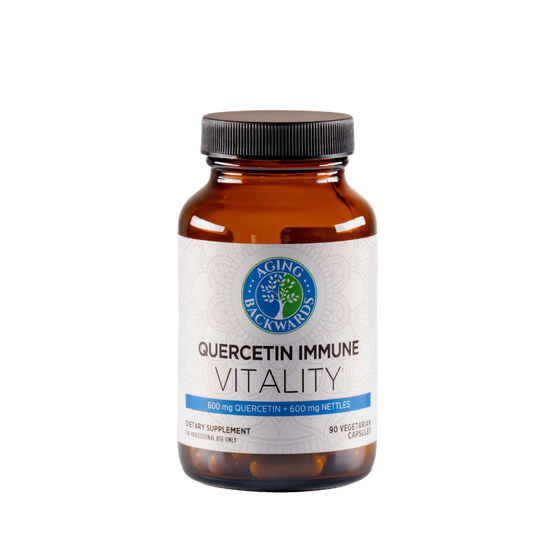
| Start here (label) — allergy or cold season | 3 capsules a day — 2 with breakfast, 1 with dinner | Always with fat; start 3 weeks before your season; give it 12 weeks |
| During a cold or allergy flare | Up to 5 capsules a day (1,000 mg, the cold-trial dose) for the illness, then back to 3 | Ask your own doctor before going above the label |
| Ask first | — | Oral liver-cleared DMT (fingolimod, siponimod), kidney disease, blood thinners; skip in pregnancy/nursing |
| Multiple sclerosis relapse or new symptoms | Don't change any dose on your own | Call your neurologist first |
If this is you
Spring (or fall) flattens you every year. Start three weeks before your pollen season. Take 2 capsules with breakfast and 1 with dinner, both with fat. Stay on it through the end of the season, the way Tami does through June.
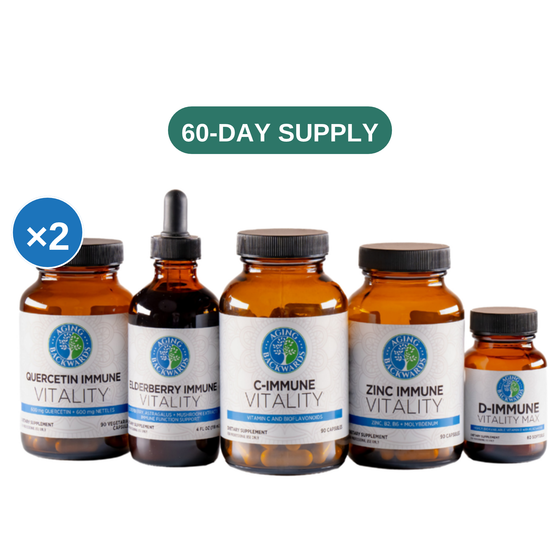
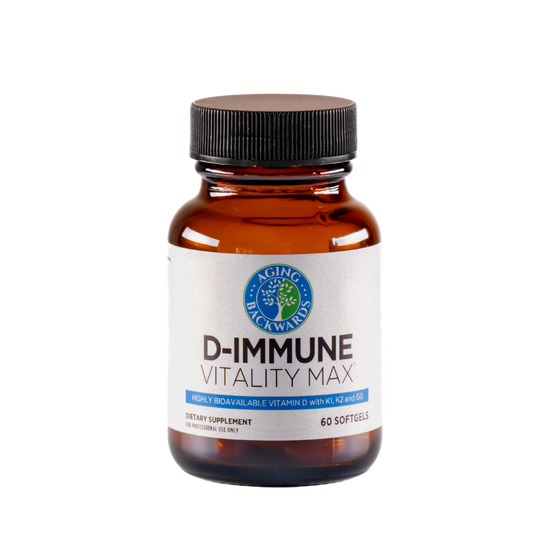
Every cold lingers, and you're over 40. Take 3 capsules a day with meals from October through April. Give it a full 12 weeks before you judge it — that's the window the cold trial used. Pair it with the vitamin D and zinc in the Immune Vitality Max Package™ rather than stacking more quercetin.
You take fingolimod, siponimod, or another liver-cleared oral multiple sclerosis drug. Don't start on your own. Quercetin shares liver pathways with these medicines; bring the label to your neurologist first.
Whichever route you've chosen for the disease itself. Some in our community take a disease-modifying therapy; some, with their doctors, have chosen not to. The dose is the same either way. On a DMT, the question is the liver-pathway note above. Off a DMT, there's nothing to interact with — and because nutrition is carrying more of the load on its own, the full 12 weeks and the pre-season start matter even more.
Also check with your own doctor if you have kidney disease, take blood thinners, or have a hormone-sensitive cancer history. Skip it if you're pregnant or nursing. Otherwise, quercetin at this dose is remarkably well tolerated, with side effects that are rare and mild.
Where Tami landed
"My spring doesn't flatten me the way it used to. I'm not spending May on the couch anymore. For me it was never about the sneezing — it was about not having my whole system go sideways every time the pollen spiked. Three capsules a day is an easy trade for that."
That's where I land too. Quercetin is one of the most useful things in your cabinet, because it keeps the small stuff small — and when you live with multiple sclerosis, keeping the small stuff small is most of the battle.
Quercetin Immune Vitality™ is part of the Immune Vitality Max Package™ at agingbackwardswellness.com. If every cold has been costing you weeks, this is the place to start.
References
- Sternberg Z, et al. Quercetin and interferon-beta modulate immune response(s) in peripheral blood mononuclear cells isolated from multiple sclerosis patients. J Neuroimmunol. 2008;205(1-2):142-147. PMID 18926575.
- Heinz SA, et al. Quercetin supplementation and upper respiratory tract infection: a randomized community clinical trial. Pharmacol Res. 2010;62(3):237-242. PMID 20478383.
- Javadi F, et al. The effect of quercetin on inflammatory factors and clinical symptoms in women with rheumatoid arthritis: a double-blind RCT. J Am Coll Nutr. 2017;36(1):9-15. https://doi.org/10.1080/07315724.2016.1140093
- Heinz SA, et al. A 12-week supplementation with quercetin does not affect natural killer cell activity… in female human subjects. Br J Nutr. 2010;104(6):849-857. https://doi.org/10.1017/S000711451000156X
- Weng Z, et al. Quercetin is more effective than cromolyn in blocking human mast cell cytokine release. PLoS One. 2012;7(3):e33805. PMID 22470478.
- Riehemann K, Behnke B, Schulze-Osthoff K. Plant extracts from stinging nettle inhibit the proinflammatory transcription factor NF-kappaB. FEBS Lett. 1999;442(1):89-94.
- Mittman P. Randomized, double-blind study of freeze-dried Urtica dioica in the treatment of allergic rhinitis. Planta Med. 1990;56(1):44-47. PMID 2192379.
These statements have not been evaluated by the Food and Drug Administration. This product is not intended to diagnose, treat, cure, or prevent any disease. This article is educational and reflects published research; it is not medical advice and does not create a doctor–patient relationship. Multiple sclerosis is a serious condition — please discuss any supplement with your neurologist or physician, especially if you take a disease-modifying therapy or other prescription medications.
Aging Backwards Wellness · Manti, Utah · agingbackwardswellness.com